Permit: Florida size, bag and season
Permit limit in Florida: outside the Special Permit Zone, slot 11 to 22 inches fork length, one over 22 inches allowed, bag 2, no more than 2 over 22 inches per vessel, open year-round. Inside the zone: 22 inch minimum, bag 1, vessel limit 2, closed April 1–July 31.
Quick answer
- Outside the SPZ
- 11–22" fork-length slot; 1 fish over 22" allowed in the bag; 2 per harvester; no more than 2 over 22" per vessel; open year-round
- Special Permit Zone
- 22" fork length minimum; 1 per harvester; no more than 2 per vessel; closed April 1–July 31
- SPZ boundary
- South of 25°40' N at Cape Florida, Biscayne Bay south of the Rickenbacker Causeway, and south of 25°09' N off Cape Sable
- Gear
- State waters: hook and line only. Federal waters: hook and line and spearing
Permit limits
| Waters | Size | Bag | Season |
|---|---|---|---|
| Special Permit Zone, state and adjacent federal waters | 22" fork length minimum | 1 per harvester. No more than 2 per vessel | Closed April 1–July 31 |
| All other state and federal waters outside the SPZ | Not less than 11" or more than 22" fork length; may possess 1 over 22" in the per-person bag | 2 per harvester. No more than 2 over 22" per vessel | Open year-round |
How do you identify Permit?
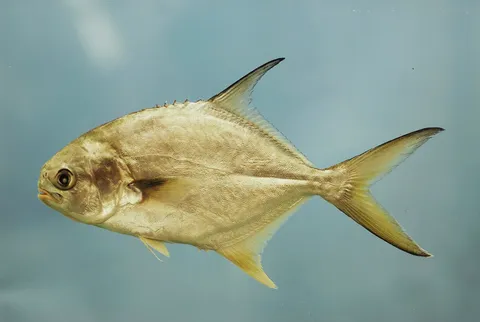
- Gray, dark or iridescent blue back shading to silver sides. Fish from dark water can show golden tints on the belly.
- The dorsal fin begins over the anal fin. Dorsal, anal and tail fins are long and slope backward. Florida pompano have a dorsal fin that starts in front of the anal fin, and those fins are short.
- The forehead rises sharply to a hump, then slopes back. The body is deeper than a Florida pompano's, and the tail has a narrow fork.
- Small permit have teeth on the tongue; pompano do not. FWC lists permit common to 50 pounds. The state record is 56 lb 2 oz, caught near Fort Lauderdale.
Look-alikes
- Permit vs. pompano. Dorsal fin ahead of the anal fin is pompano; dorsal fin over the anal fin is permit.
- Florida pompano. Pompano stay smaller, the dorsal fin starts ahead of the anal fin, and the limit is 11 inches and 6 fish.
Where and when to catch Permit in Florida?
Permit are found offshore near structure and inshore over grass flats, sand and channels. Spawning is mainly in early summer and again in fall. A plate at the back of the mouth crushes clams and crabs; they also eat small fish. FWC says anglers cast live crabs to schools, and that permit also take shrimp, clams and occasionally small fish. The Keys and south Florida fall in the Special Permit Zone, so the 22-inch minimum and the April 1 through July 31 closure apply there.
Regions
- Florida Keys fishing rules
- Sarasota & Southwest fishing rules
- Tampa Bay fishing rules
- Jacksonville & Northeast fishing rules
- Panhandle & Emerald Coast fishing rules
Related rules on this site
Frequently asked questions
What is the permit limit outside the Special Permit Zone?
A slot of not less than 11 inches or more than 22 inches fork length. You may keep 1 fish over 22 inches in the per-person bag. The bag is 2 per harvester, with no more than 2 fish over 22 inches per vessel. Open year-round.
What is the permit limit in the Special Permit Zone?
22 inches fork length minimum, 1 per harvester, and no more than 2 per vessel. Closed April 1 through July 31.
Where is the Special Permit Zone?
State and adjacent federal waters south of 25°40' North at Cape Florida, Biscayne Bay south of the Rickenbacker Causeway, and south of 25°09' North off Cape Sable.
What gear is legal for permit?
Hook and line only in state waters. Hook and line and spearing in federal waters. Multiple hooks with live or dead natural bait, and snatching, are prohibited.
Official sources
Related guides
- Spotted seatrout regions 2026
- Snook season: Gulf vs. Atlantic
- Snook permit for catch-and-release
- Redfish limits by region
- Flounder season & size
- Sharks you can keep from shore
- Is chumming legal?
- Stone crab rules
- Blue crab rules
- Seniors 65+ & State Reef Fish Angler
- Red drum (redfish)
- Common snook
- Spotted seatrout
- Tarpon
- Gag grouper
- Red grouper
- Black grouper
- Red snapper
- Gray (mangrove) snapper
- Mutton snapper
- Yellowtail snapper
- Cobia
- Florida pompano
- Sheepshead
- Flounder (southern/Gulf)
- King mackerel (kingfish)
- Spanish mackerel
- Dolphinfish (mahi-mahi)
- Greater amberjack
- Gray triggerfish
- Hogfish
- Black drum
- Bonefish
- Tripletail
- Spiny lobster
- Wahoo
- Bluefish
- Black sea bass
- Permit vs. pompano
- Spotted seatrout vs. weakfish
- Mutton vs. lane vs. mangrove snapper
- Skyway Fishing Pier State Park
- Venice Fishing Pier
- Fort De Soto Park Gulf & Bay Piers
- Naples Pier
- All piers & bridges
- What to catch by month