Snook slot: 28–33 inches on the Gulf, 28–32 on the Atlantic
On this page
Varies by region
- Gulf slotNot less than 28" or more than 33" total length
- BagOne fish per person per day
Snook, one a day: Gulf regions use a slot of not less than 28 inches or more than 33 inches total length. Southeast, Indian River Lagoon and Northeast use 28 to 32 inches. Closed seasons differ by region and the table has them. You need a snook permit and a recreational fishing license.
The numbers, briefly
- Bag
- One fish per person per day
- Gulf slot
- Not less than 28" or more than 33" total length
- Atlantic slot
- Not less than 28" or more than 32" total length
- Permit
- Snook permit and recreational fishing license
- Gear
- Hook and line only
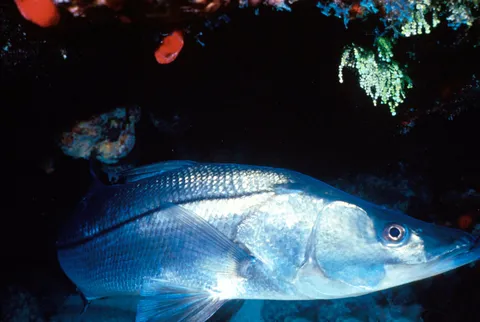

Common snook limits
| Waters | Size | Bag | Season |
|---|---|---|---|
| Panhandle | Not less than 28" or more than 33" total length | One fish per person per day | Closed December 1 – end of February, and May 1 – August 31 |
| Big Bend | Not less than 28" or more than 33" total length | One fish per person per day | Closed December 1 – end of February, and May 1 – August 31 |
| Tampa Bay | Not less than 28" or more than 33" total length | One fish per person per day | Closed December 1 – end of February, and May 1 – August 31 |
| Sarasota Bay | Not less than 28" or more than 33" total length | One fish per person per day | Closed December 1 – end of February, and May 1 – August 31 |
| Charlotte Harbor | Not less than 28" or more than 33" total length | One fish per person per day | Closed December 1 – end of February, and May 1 – September 30 |
| Southwest | Not less than 28" or more than 33" total length | One fish per person per day | Closed December 1 – end of February, and May 1 – September 30 |
| Southeast | Not less than 28" or more than 32" total length | One fish per person per day | Closed December 15 – January 31, and June 1 – August 31 |
| Indian River Lagoon | Not less than 28" or more than 32" total length | One fish per person per day | Closed December 15 – January 31, and June 1 – August 31 |
| Northeast | Not less than 28" or more than 32" total length | One fish per person per day | Closed December 15 – January 31, and June 1 – August 31 |
What does a common snook look like?
- Large mouth with a protruding lower jaw. The jaw reaches below the rear portion of the eye. The forehead slopes.
- High dorsal fin that is divided. A black lateral line extends onto the tail. The pelvic fin is yellow.
- FWC's snook profile lists size up to 48 inches (50 pounds). Common snook grow much larger than the other snook species on that profile list.
- The state record on the profile is 45 lbs 12 oz, caught near Sebastian.
Don't confuse it with
- Tarpon. A different inshore fish. Snook have a divided dorsal fin and a black lateral line that runs onto the tail.
Where do snook sit along the Florida coast?
Snook live inshore, on mangrove shorelines, over seagrass, along beaches, and tight to structure. They face the current and wait. They can't take water colder than 60°F, though freshwater doesn't bother them. Between 18 and 22 inches, some males become females. FWC's bait list is live pinfish, small mullet, shrimp or sardines, free-lined or fished off the bottom. The gill covers are razor sharp, so watch your hand.
Unofficial. FL Fish Rules is not the Florida Fish and Wildlife Conservation Commission. Confirm the slot, the closed season, and the region on MyFWC's snook page before you fish.
How FWC measures the snook slot
The regulations page says total length. FWC's measurement page puts snook on the total-length list. Close the mouth. Lay the fish on its side. Pinch the tail. Measure a straight line from the most forward point of the head to the farthest tip of the tail, with the tail compressed or squeezed. A tape that follows the curve of the body reads long. Lay the tape flat on a hard surface. In 2006 FWC clarified total length as a pinched tail and a closed mouth. The same drawing is on how to measure.
Gulf regions, the six from the Panhandle through the Southwest, use a slot of not less than 28 inches or more than 33 inches total length. Southeast, Indian River Lagoon, and Northeast use not less than 28 inches or more than 32 inches total length. The bag on every region block is one fish per person per day.
Whole condition, hook and line, snook permit
FWC's other-regulations block says snook must remain in whole condition until landed ashore. Allowable gear is hook and line only. No commercial harvest or sale. On a for-hire trip, captain and crew may not retain a bag limit. The license line is a snook permit and a recreational fishing license. The note under it says to check the regulations before you buy: all sales are final, and refunds will not be given even if snook is closed to harvest. The management history on the same page still calls that requirement a "snook stamp." The license line itself says snook permit. Fee details already published on this site are on the snook permit page. This fetch of the regulations page did not restate the dollar amount.
FWC says harvest has been regulated since the mid-1950s, and that snook stocks are exceeding the management goal of 40% spawning potential ratio on both the Gulf and Atlantic coasts. The page defines SPR as the percent of the total biomass of mature fish in a fished population compared with an unfished population. In 2023 FWC moved to regional management and points to annual reviews. Those PDFs were not opened for this page.
Water that does not follow the nearest coast
The star note says the regulations apply in all inland, state, and adjacent federal waters. Which inland water uses which slot is in the region block, not in the town name. The full boundary text is on the Gulf and Atlantic season page. Three assignments change the slot or the closed season:
- Lake Okeechobee, the Kissimmee River, and the lakes FWC marks with blue hatch are in the Indian River Lagoon block. That is the Atlantic slot, not less than 28 inches or more than 32 inches, and the Atlantic closures. Charlotte Harbor and the Southeast block both say they do not include Lake Okeechobee.
- Everglades National Park is in the Southwest block: Gulf slot, not less than 28 inches or more than 33 inches, closed May 1 through September 30. The Southeast block says it does not include the park.
- Big Bend includes the Withlacoochee River and its tributaries. The Northeast block says it does not include the Withlacoochee. On the Withlacoochee, use the Gulf slot and the Big Bend closures.
Lines that sit inside the same closed season are still on the season page: Ochlockonee Bay and river are not in the Panhandle; the Anclote is Big Bend, not Tampa Bay; Palma Sola Bay is Sarasota Bay, not Tampa Bay.
Four snook on FWC's profile list
The regulations page prints one slot, one bag, and one closed season per region. It does not print a separate slot for fat snook, swordspine snook, or tarpon snook. It links their profiles. The marks below are the ones those profiles list. This page does not decide whether a small snook of another species is a legal keeper. Confirm that fish on MyFWC before it goes in the box.
- Common snook, Centropomus undecimalis. Large mouth, protruding lower jaw that reaches below the rear portion of the eye, sloping forehead, divided dorsal fin, black lateral line onto the tail, yellow pelvic fin. Up to 48 inches (50 pounds). State record 45 lbs 12 oz, near Sebastian. Some males become females between 18 and 22 inches. They cannot tolerate water colder than 60°F. Freshwater does not bother them. Gill covers are razor sharp.
- Fat snook, Centropomus parallelus. Deeper body. Mouth reaches below the center of the eye. Yellow-brown to green-brown back, silver sides, black lateral line onto the tail. Common to 10 inches, may reach 28. Not eligible for a state record. The profile says they occur more in freshwater than other snook.
- Swordspine snook, Centropomus ensiferus. Anal fin extends past the base of the caudal fin. Largest scales of the snooks. Slightly concave profile. Yellow-green to brown-green back, silver belly. Smallest of the snooks. Common to 10 inches, may reach 15. Not eligible for a state record. Rare on the west coast.
- Tarpon snook, Centropomus pectinatus. The only snook with 7 anal fin rays. The others have 6. Lower jaw curves upward. Tips of the pelvic fins reach beyond the anus. Compressed body. Prominent black lateral line onto the tail. Common to 15 inches, may reach 22. Not eligible for a state record. Rare on the west coast. This is a snook. The silver king is tarpon.
Biscayne National Park
The Southeast region block says special regulations apply in Biscayne National Park. The park page, effective July 1, 2020, puts "snook species" in a 10-fish aggregate recreational bag for harvest inside the park. It also says species-specific limits still apply, and the aggregate does not authorize harvest over a species-specific bag. Snook is not on the park's increased minimum-size list, so this site does not print a park slot. Transit of the listed species over that 10-fish aggregate is not allowed through the park.
Pier and bridge pages
- Skyway Fishing Pier State Park, St. Petersburg / Tampa Bay
- Fort De Soto Park Gulf & Bay Piers, Tierra Verde (Pinellas County)
- Venice Fishing Pier, Venice
- Naples Pier, Naples (Collier County)
- Jacksonville Beach Fishing Pier, Jacksonville Beach (Duval County)
- St. Johns County Ocean Pier, St. Augustine Beach (St. Johns County)
- Navarre Beach Pier, Navarre Beach (Santa Rosa County)
- Russell-Fields City Pier, Panama City Beach (Bay County)
- Long Key Viaduct Fishing Bridge, US-1, MM 63–65.5 (Monroe County)
- Ohio–Bahia Honda Channel Fishing Bridge, Lower Keys, US-1 (Monroe County)
Regions on this site
- Panhandle & Emerald Coast fishing rules
- Tampa Bay fishing rules
- Sarasota & Southwest fishing rules
- Florida Keys fishing rules
- Jacksonville & Northeast fishing rules
- Southeast & Treasure Coast fishing rules
Rules already written up
- Snook season: Gulf vs. Atlantic
- Snook permit, including catch-and-release
- How to measure total length
- Saltwater fishing license
- Shoreline license and kayaks
- Unregulated species default bag
- 2026 closed seasons calendar
- Open now and closing soon
- What to catch by month
Straight answers
What is the snook slot limit?
Not less than 28 inches or more than 33 inches total length in the Panhandle, Big Bend, Tampa Bay, Sarasota Bay, Charlotte Harbor and Southwest. Not less than 28 inches or more than 32 inches in the Southeast, Indian River Lagoon and Northeast.
What is the snook bag limit?
One fish per person per day in every region.
Do you need a snook permit to catch and release snook?
FWC lists a snook permit and a recreational fishing license as license requirements for snook. The permit note says all sales are final, and refunds will not be given even if snook is closed to harvest. The management history on the same page calls the requirement a snook stamp. See the snook-permit page for the catch-and-release rule and the fee already published there.
What gear is legal for snook?
Hook and line only. Snook must remain in whole condition until landed ashore.
Which snook regions close through September?
Charlotte Harbor and the Southwest region stay closed from May 1 through September 30. Panhandle, Big Bend, Tampa Bay and Sarasota Bay reopen September 1. Atlantic regions close June 1 through August 31.
How does FWC measure a snook?
Total length. Mouth closed, fish on its side, tail compressed or squeezed, from the most forward point of the head to the farthest tip of the tail. Snook is on FWC's total-length list.
Which snook rule covers Lake Okeechobee?
The Indian River Lagoon block. It includes the Kissimmee River, Lake Okeechobee, and other lakes marked with blue hatch. Charlotte Harbor and the Southeast block both say they do not include Lake Okeechobee. The Lagoon slot is not less than 28 inches or more than 32 inches total length.
How do you read the snook limit table?
Pick the region in the waters column, then read across. Every bag cell is one fish per person per day. Panhandle, Big Bend, Tampa Bay, Sarasota Bay, Charlotte Harbor and Southwest use a slot of not less than 28 inches or more than 33 inches. Southeast, Indian River Lagoon and Northeast use not less than 28 inches or more than 32 inches. The season cell lists closures. Panhandle, Big Bend, Tampa Bay and Sarasota Bay close December 1 through the end of February and May 1 through August 31. Charlotte Harbor and Southwest close December 1 through the end of February and May 1 through September 30. Southeast, Indian River Lagoon and Northeast close December 15 through January 31 and June 1 through August 31. State waters are from shore to 3 miles in the Atlantic and from shore to 9 miles in the Gulf.
Which column tells you snook harvest is closed?
The season column. A date range there is a closure, not an open season. The size column can still show a slot on that row. You cannot keep a fish during the dates in the season cell. The bag column stays one fish on every row.