King mackerel size and bag in Florida
On this page
Open year-round
- Size24" fork length
King mackerel minimum: 24 inches fork length. Gulf state waters and Monroe County allow 3 per harvester. Atlantic state waters, excluding Monroe County, allow 2 per harvester. Both are open year-round. Legal gear is hook and line and spearing only. Port meetings may change future management.
Short version
- Rules in flux
- SAFMC port meetings under way that may affect future king/Spanish mackerel management.
- Size
- 24" fork length
- Gulf and Monroe County
- 3 per harvester, open year-round
- Atlantic, except Monroe County
- 2 per harvester, open year-round
- Gear
- Hook and line and spearing only
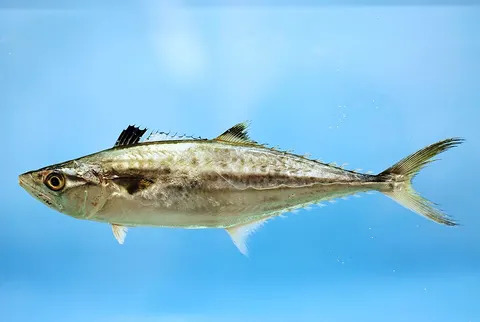

King mackerel (kingfish) limits
| Waters | Size | Bag | Season |
|---|---|---|---|
| Gulf state waters and Monroe County | 24" fork length | 3 per harvester | Open year-round |
| Atlantic state waters, excluding Monroe County | 24" fork length | 2 per harvester | Open year-round |
Three checks before a small king goes in the Spanish bag
Adult king mackerel have no spots, no dark blotch on the front of the first dorsal fin, and a lateral line that drops sharply below the second dorsal fin. Juveniles may have yellowish spots, like Spanish mackerel. Cero have the dorsal blotch and a gently sloping lateral line, plus a yellowish stripe.
The king minimum is 24 inches fork length. Gulf state waters and Monroe County allow 3 per harvester. Atlantic state waters, excluding Monroe County, allow 2. Spanish mackerel are 12 inches fork length and 15 per harvester. A spotted fish at the Spanish size is not a legal king. The full three-check write-up is on the Spanish page and on king vs. Spanish mackerel. King gear on the recreational page is hook and line and spearing only. The profile says to use 20-pound line and tackle, or heavier for larger kings, with a wire or mono leader.
Snout to the rear center edge of the tail
FWC fish measurement measures fork length from the tip of the jaw or tip of the snout with closed mouth to the center of the fork in the tail. King mackerel and Spanish mackerel are on that list. Take a straight line. Do not follow the contour of the fish. Lay a flexible tape flat on a hard surface.
The king size rules say it a second way. 68B-12.0035 and 68B-30.0025 both prohibit a king mackerel with a fork length less than 24 inches, measured from the tip of the snout to the rear center edge of the tail. The measurement page adds a closed mouth and the tip of the jaw. The rules name the snout and the rear center edge. Use a fish that meets both descriptions.
Landed whole
Both size rules say all king mackerel shall be landed in a whole condition. Possession, in or on state waters, on any public or private fishing pier, on a bridge or catwalk attached to a bridge from which fishing is allowed, or on any jetty, of a king that has been deheaded, sliced, divided, filleted, ground, skinned, scaled, or deboned is prohibited. The Gulf rule has no comma before "or deboned." The Atlantic rule does. Mere evisceration or gutting of such fish, or mere removal of gills before landing is not prohibited.
The recreational king page does not print that sentence. The rules do. A king that is caught and immediately returned to the water free, alive, and unharmed is not harvested. The rules also call the fish kingfish. The scientific name on the profile and in the rules is Scomberomorus cavalla.
The 3-fish bag and the one-fish notice
The recreational page fetched October 31, 2026 lists 3 per harvester in Gulf state waters and Monroe County, and 2 per harvester in Atlantic state waters, excluding Monroe County. Both rows say open year-round. Rule 68B-12.002 names the Gulf-and-Monroe waters the Gulf-Atlantic fishery: all Florida waters of the Gulf of America, and all Florida waters of the Atlantic Ocean south of a line extending due east of the Miami-Dade/Monroe county line. Rule 68B-30.002 names the Atlantic fishery as Florida Atlantic waters north of that same line.
Rule 68B-12.004 sets the Gulf-Atlantic bag at three fish per person, per day, unless it is reduced to one fish per person, per day. Rule 68B-12.0045 runs that bag-limit season from July 1 through June 30. If harvest in the adjacent federal EEZ closes before that season ends, the state bag-limit season continues until the next July 1 at one fish per person per day, after the Commission gives notice. The recreational page does not print that notice. The 3-fish line is the number it is still publishing. Do not replace it with 1 unless you have the notice. The Atlantic bag rule says two fish per person, per day, which matches the page's 2 per harvester.
Atlantic gear in 68B-30.003 is hook and line gear, or spearing. Rule 68B-30.002 defines spearing as bow hunting, gigging, spearfishing, or any device used to capture a fish by piercing the body. Spearing does not include hook and line, and it does not include snagging (snatch hooking). The Gulf chapter index has no rule titled gear. The recreational page is the line that covers both regions: hook and line and spearing only. This site is unofficial. Confirm the MyFWC king mackerel page before you fish.
Rules in flux. SAFMC port meetings under way that may affect future king/Spanish mackerel management.
What does a king mackerel look like?
- Back is bluish-green, fading to silvery sides and belly, with no spots. Juveniles may have yellowish spots, similar to Spanish mackerel.
- Front of the first dorsal fin lacks a dark blotch. The king profile says cero and Spanish mackerel both have that blotch, and a gently sloping lateral line.
- The lateral line drops sharply below the second dorsal fin.
- The same profile lists wahoo, A. solandri, by a first dorsal fin that is long and continuous. Size on the profile: up to 72 inches. State record: 90 lb, caught near Key West. The rule also calls this fish kingfish.
Mackerels alongside it
- Spanish mackerel. Irregular golden-yellow spots, a bluish-black blotch on the front of the first dorsal fin, and a lateral line that slopes gently from behind the gill cover to the tail.
- King vs. Spanish mackerel. The three profile marks side by side, plus the 24-inch king minimum and the 12-inch Spanish minimum.
- Wahoo. First dorsal fin long and continuous, and 24 to 30 wavy, dark blue bars. No minimum size, bag 2 per person.
Where do kingfish travel in Florida?
Coastal to offshore waters, often around piers, and occasionally in deep water. Beach and pass piers are in that coastal water. They school. They migrate from south Florida waters in winter northward in spring, and they spawn offshore in mid-summer. They feed mainly on fishes. The profile's live baits are pogies, herring, Spanish sardine, ballyhoo, and mullet, and it also lists squid. Lures should be flashy sub-surface lures or large fish-like plugs. Use 20-pound line and tackle, or heavier for larger kings, with a wire or mono leader.
Pier and bridge pages
- Skyway Fishing Pier State Park, St. Petersburg / Tampa Bay
- Fort De Soto Park Gulf & Bay Piers, Tierra Verde (Pinellas County)
- Venice Fishing Pier, Venice
- Naples Pier, Naples (Collier County)
- Jacksonville Beach Fishing Pier, Jacksonville Beach (Duval County)
- St. Johns County Ocean Pier, St. Augustine Beach (St. Johns County)
- Navarre Beach Pier, Navarre Beach (Santa Rosa County)
- Russell-Fields City Pier, Panama City Beach (Bay County)
Regions on this site
- Panhandle & Emerald Coast fishing rules
- Tampa Bay fishing rules
- Sarasota & Southwest fishing rules
- Florida Keys fishing rules
- Jacksonville & Northeast fishing rules
- Southeast & Treasure Coast fishing rules
- King vs. Spanish mackerel
- Spanish mackerel
- Wahoo
- How to measure fish
- Extended for-hire bag limits
- Billfish, tuna and swordfish
- Saltwater fishing license
- 2026 closed seasons calendar
- Open now and closing soon
- What to catch by month
Questions and answers
What is the king mackerel size limit?
24 inches fork length in Gulf state waters, Monroe County, and Atlantic state waters. Rules 68B-12.0035 and 68B-30.0025 measure that fork length from the tip of the snout to the rear center edge of the tail.
What is the king mackerel bag limit?
The recreational page says 3 per harvester in Gulf state waters and Monroe County, and 2 per harvester in Atlantic state waters excluding Monroe County. Rule 68B-12.004 says three fish per person, per day in the Gulf-Atlantic fishery, unless a notice drops it to one. Rule 68B-30.003 says two fish per person, per day in the Atlantic fishery.
Is king mackerel open year-round?
The recreational page lists both areas as open year-round. Rule 68B-12.0045 runs the Gulf-Atlantic bag-limit season from July 1 through June 30, and it does not print a closed month. If adjacent federal waters close early, that rule can continue the state season until the next July 1 at 1 fish per person per day, after FWC gives notice. The recreational page fetched October 31, 2026 does not print that notice.
How do you tell a king mackerel from a Spanish mackerel?
Adult king mackerel have no spots, the front of the first dorsal fin lacks a dark blotch, and the lateral line drops sharply below the second dorsal fin. Spanish mackerel have irregular golden-yellow spots, a bluish-black blotch, and a lateral line that slopes gently. The side-by-side page is king vs. Spanish mackerel.
How do you read the king mackerel limit table?
Both rows are 24 inches fork length and open year-round. The bag cell is the difference: 3 per harvester in Gulf state waters and Monroe County, and 2 per harvester in Atlantic state waters excluding Monroe County. Monroe County is on the first row, not the Atlantic row. State waters are from shore to 3 miles in the Atlantic and from shore to 9 miles in the Gulf.
Which column changes between the king mackerel rows?
Only the bag column. Size stays 24 inches fork length and the season stays open year-round. Use 3 when the waters cell is Gulf state waters and Monroe County. Use 2 when it is Atlantic state waters excluding Monroe County.
Source pages
- FWC: Saltwater Recreational Regulations
- FWC: King mackerel (kingfish)
- FWC: Fish measurement
- FWC profile: King mackerel
- FWC: Spanish mackerel
- Fla. Admin. Code 68B-12.0035
- Fla. Admin. Code 68B-12.004
- Fla. Admin. Code 68B-12.0045
- Fla. Admin. Code 68B-30.0025
- Fla. Admin. Code 68B-30.003
- SAFMC port meetings, linked from the FWC page