Mutton vs. lane vs. mangrove snapper: identification and limits
On this page
At a glance
- Fastest ID
- Pointed anal fin = mutton; rounded anal fin + yellow stripes = lane; dark gray with big canines = mangrove
- Mutton
- 18" TL, 5/day (both coasts)
- Lane
- Gulf state 10", 20/day (new Apr 1, 2026); Atlantic 8", 10/day in aggregate
- Mangrove (gray)
- State 10", 5/day; federal 12", 10/day
- Permits
- Saltwater license; State Reef Fish Angler for mutton from a private boat
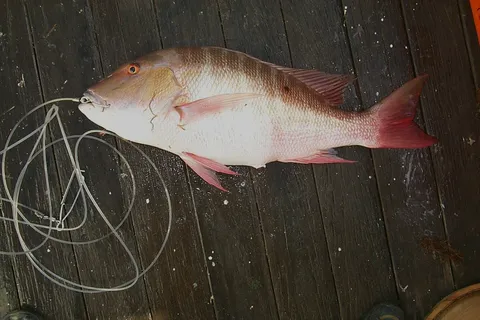

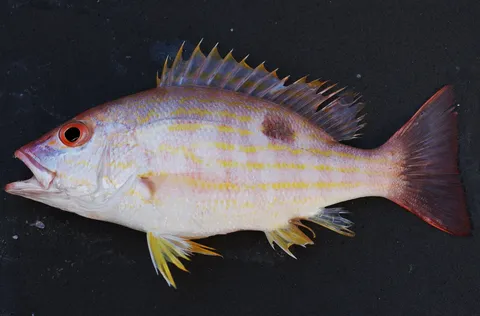

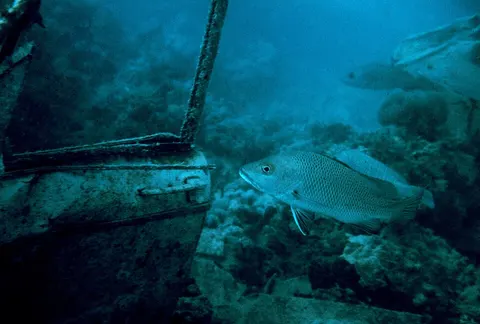

Identification
| Feature | Mutton | Lane | Mangrove (gray) |
|---|---|---|---|
| Body color | Olive-green above, lighter belly | Pinkish-red above, silvery belly | Dark brown or gray |
| Markings | Dark spot just above lateral line; blue line under eye along gill cover | 8–10 yellowish side stripes; dark spot touching lateral line, about eye-size | Red-orange spots in bars; juveniles have dark stripe snout→eye→gill cover |
| Anal fin | Pointed | Rounded | n/a |
| Fins | Red tint on fins below lateral line | Tail edged in black | Dorsal fins with dark or reddish borders |
| Teeth | Chevron-shaped vomerine tooth patch | n/a | Two large upper canines; anchor-shaped vomerine tooth patch |
| Typical size (FWC) | Up to 30 in | Usually under 14 in | Common to 24 in |
Limits by coast
| Species | Gulf (state) | Gulf (federal) | Atlantic |
|---|---|---|---|
| Mutton | 18" TL; 5 (in 10-snapper aggregate) | 18" TL; 5 | 18" TL; 5 (in aggregate) |
| Lane | 10" TL; 20 (not in aggregate) | 8" TL; 20 in reef fish aggregate | 8" TL; 10 (in aggregate) |
| Gray (mangrove) | 10" TL; 5 (in aggregate) | 12" TL; 10 (in aggregate) | State 10" / federal 12"; state 5 / federal 10 |
Names and measurement FWC uses
The regulations page calls the gray fish Gray (Mangrove). The profile also says mangrove snapper, mango, or black snapper, and it calls the roof-of-the-mouth teeth an anchor-shaped vomerine tooth patch. Mutton snapper get a chevron-shaped vomerine tooth patch, and the profile's similar species is lane snapper because the anal fin is rounded. Snappers are total-length fish: most forward point of the head, mouth closed, to the farthest tip of the tail with the tail compressed or squeezed, fish on its side. How to measure.
Biscayne National Park
Effective July 1, 2020, FWC prints higher recreational and commercial minimums inside the park: gray (mangrove) snapper 12 inches total length, changed from 10; lane snapper 10 inches total length, changed from 8; mutton snapper 19 inches total length, changed from 18. The mutton line has an asterisk. The park page does not say what the asterisk means. All three are in the park's 10-fish recreational aggregate, with schoolmaster and yellowtail. Species bags still apply. Fish smaller than the park minimum can be transited if they were legally harvested outside the park. Transit of these species over the 10-fish aggregate is not allowed. Biscayne National Park rules.
Reef fish gear
The snappers page says reef fish gear requirements apply. On a vessel in Gulf of America state waters that means non-stainless steel, non-offset circle hooks when fishing with natural bait, a dehooking device, and a descending device or venting tool rigged and ready. FWC marks the descending-device rule effective April 1, 2023. Atlantic hook rules on the gear page change at 28° N. latitude. South of that line, state and federal Atlantic waters call for non-stainless steel hooks with natural bait, not specifically circle hooks. Atlantic federal waters require a descending device on board and readily available. Reef fish gear.
This site is unofficial. Confirm the current rule on MyFWC before you fish.
Lane snapper limits · Mutton snapper limits · Gray snapper limits · Yellowtail snapper · Red snapper · Vermilion snapper · Schoolmaster · Cubera snapper
Check these first
- Count it toward the 10-snapper aggregate where applicable (mutton, gray, and Atlantic lane).
- Gulf lane snapper (state waters) are outside the aggregate since April 1, 2026.
- Federal and state sizes differ for gray snapper (12" vs 10").
- In Biscayne National Park the minimums are higher: gray 12" TL, lane 10" TL, mutton 19" TL.
- On a vessel in Gulf of America state waters, carry non-stainless steel, non-offset circle hooks for natural bait, a dehooking device, and a descending device or venting tool rigged and ready.
- Sign up for the free State Reef Fish Angler designation before targeting mutton from a private boat.
- This site is unofficial. Confirm the current rule on MyFWC before you fish.
How to get the permit
- Saltwater license, unless you're exempt.
- From a private boat, add the free State Reef Fish Angler designation at GoOutdoorsFlorida.com before you target a listed reef fish.
Straight answers
How do you tell mutton snapper from lane snapper?
Check the anal fin. Mutton snapper have a pointed anal fin and lane snapper have a rounded one. Lane snapper are pinkish-red with 8 to 10 yellowish side stripes and a black-edged tail. Mutton snapper are olive-green above, with a blue line under the eye and red-tinged lower fins.
How do you identify a mangrove (gray) snapper?
Mangrove snapper are dark brown or gray with rows of red-orange spots, two large canine teeth at the front of the upper jaw, and dark or reddish edges on the dorsal fins. Young fish have a dark stripe from the snout through the eye.
What is the mutton snapper size limit?
18 inches total length, 5 per person within the 10-snapper aggregate, Gulf and Atlantic, open year-round.
What changed for Gulf lane snapper in 2026?
Starting April 1, 2026, Gulf state waters have a 10-inch minimum and a 20-fish bag limit for lane snapper, and they are not counted in the 10-snapper aggregate. Gulf federal waters are 8 inches, 20 within the reef fish aggregate.
Do I need the State Reef Fish Angler designation for these snappers?
For mutton snapper, yes, when fishing from a private boat; it is on the SRFS species list. Lane and gray snapper are not on that list.
What changes inside Biscayne National Park?
Effective July 1, 2020, FWC's park minimums are gray (mangrove) snapper 12 inches total length, changed from 10; lane snapper 10 inches total length, changed from 8; and mutton snapper 19 inches total length, changed from 18. The mutton line has an asterisk the page does not explain. All three are in the park's 10-fish recreational aggregate. The species bag still applies. Fish under the park size can be carried through if they were legally caught outside. You cannot transit those species over the 10-fish aggregate.
How does FWC measure these snappers?
Total length. From the most forward point of the head, with the mouth closed, to the farthest tip of the tail with the tail compressed or squeezed, while the fish is lying on its side. FWC lists snappers as a total-length group.