Red drum vs. black drum: tail spot, barbels, and limits
On this page
What you need in one box
- Fastest ID
- Chin barbels and no tail spot = black drum. No barbels, usually an ocellated spot at the tail base = red drum
- Red drum slot
- Not less than 18" and no more than 27" total length, 1 per person
- Black drum slot
- 14–24" total length, one fish over 24" allowed within the bag of 5
- Bag
- Red drum 1. Black drum 5 per harvester, and that 5 can include the fish over 24"
This site is unofficial. It is not FWC. Confirm red drum on the MyFWC red drum page and black drum on the MyFWC black drum page before you keep a fish.
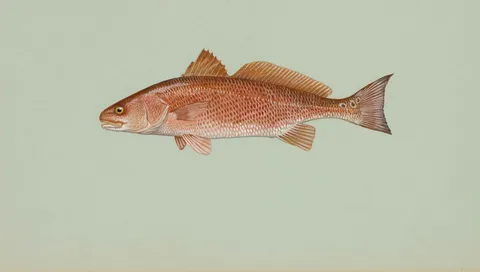

Side by side, from the MyFWC pages
| Mark or rule | Red drum (redfish) | Black drum |
|---|---|---|
| Scientific name | Sciaenops ocellatus | Pogonias cromis |
| Tail | One or more dark, ocellated spots at the base of the tail. Occasionally without a spot. | No tail spot |
| Chin | Lack barbels on the lower jaw | Barbels on the lower jaw |
| Body | Copper-bronze, fading to a lighter belly. Large scales. | Highly arched back, gray or black, fading to a lighter belly. Large scales. |
| Young fish | Inshore until roughly 30 inches (about 4 years), then nearshore | 4 to 6 dark vertical bars that fade. Somewhat similar to sheepshead and spadefish |
| Teeth | Powerful pharyngeal teeth | Powerful pharyngeal teeth |
| Jaw | Adults: sub-terminal. The upper jaw extends beyond the lower jaw | Not described on the black drum profile |
| Slot | Not less than 18" and no more than 27" total length | 14–24" total length, with one fish over 24" within the bag of 5 |
| Bag | 1 per person per day. Vessel limit 4 or 2 by region | 5 per harvester per day (can include one over 24") |
| Season | Open year-round where harvest is allowed. Indian River Lagoon is catch-and-release only | Open year-round |
| Legal gear | Hook and line, cast nets | Hook and line, cast net, seine, spear or gig |
| Illegal gear | Spearing (spearfishing, gigging and bowfishing, and snatch hooking) and/or multiple hooks with live or dead natural bait | Any multiple hook with live or dead natural bait. Snatching prohibited |
The two fish share pharyngeal teeth and an oyster-bar diet. That is why the heads feel alike on the deck. The profile pages split them on the chin and the tail: red drum, Sciaenops ocellatus, lack barbels and usually carry ocellated spots at the base of the tail. Black drum, Pogonias cromis, have the barbels and lack the spot. FWC's similar-species lines say the same thing in both directions.
Slots that do not swap
Where you can keep a red drum, the slot is not less than 18 inches and no more than 27 inches total length, one fish per person. The boat cap is 4 in the Panhandle, Big Bend, and Northeast, and 2 in Tampa Bay, Sarasota Bay, Charlotte Harbor, Southwest, and Southeast. Charlotte Harbor's line is the one that inserts "and": not less than 18 inches and no more than 27 inches. The inches match the other open regions. The Indian River Lagoon is catch-and-release only. Region lines are on redfish limits by region.
Black drum stay on one row: Gulf and Atlantic state waters, a slot of 14 to 24 inches total length with one fish over 24 inches allowed, 5 per harvester per day, and that 5 can include the larger fish. Open year-round. Exactly 14 and 24 inches are within the slot; only a fish greater than 24 inches uses the exception. The FWC Fish Measurement page lists both red drum and black drum under total length: close the mouth, compress the tail and take a straight-line measurement with the fish lying on its side.
Gear FWC lists, fish by fish
Red drum legal gear is hook and line and cast nets. The illegal-gear line prohibits spearing, and the parenthesis includes spearfishing, gigging and bowfishing, and snatch hooking, and/or a multiple hook used with live or dead natural bait. Black drum legal gear adds a seine and a spear or gig, and it says cast net in the singular. Snatching is prohibited. A multiple hook with natural bait is prohibited on both pages. The words are not identical: red drum says "snatch hooking," and black drum says "snatching."
A 15 to 30 pound line on bait-casting or spinning tackle is a black drum profile tip, not a legal maximum. The bait stays on the bottom. Red drum will take a live shrimp under a popping cork, and the profile also names crabs, mullet, pinfish, killifish (mud minnows), soft-bodied jigs, spoons, and top-water plugs.
Park aggregate, not a new bag
Both recreational pages point at Biscayne National Park. Inside the park, spotted seatrout, redfish, and black drum sit in a 10-fish recreational aggregate per person, effective July 1, 2020. Species-specific limits still apply. The aggregate does not let you keep more red drum than the regional bag, or more black drum than 5. Transit of those listed species over the 10-fish aggregate is not allowed.
Full species pages: red drum (redfish) and black drum. The lines on this page were read from those MyFWC pages on October 31, 2026. The sitewide Last verified stamp was not moved.
Before you keep a fish
- Check the chin for barbels before you worry about the tape.
- Both species use total length. Red drum use an 18 to 27 inch slot; black drum use a 14 to 24 inch slot with a one-fish over-slot exception.
- A gig that is legal for black drum is spearing for red drum.
- The Indian River Lagoon takes no red drum. Black drum are not on that catch-and-release line.
- Inside Biscayne National Park, both count toward the 10-fish aggregate. The species bag still caps you.
If the rule isn't clear
How do you tell a red drum from a black drum?
Look at the chin and the base of the tail. Red drum lack barbels and usually have one or more dark, ocellated spots at the base of the tail. FWC says a red drum is occasionally without a spot. Black drum have barbels on the lower jaw and no tail spot. A young black drum has 4 to 6 dark vertical bars that fade with age. FWC says those bars are somewhat similar to sheepshead and spadefish.
Can you keep a black drum on the redfish slot?
No. They are different rules. Where red drum harvest is open, the slot is not less than 18 inches and no more than 27 inches total length, 1 per person. Black drum are a 14 to 24 inch total-length slot with one fish over 24 inches allowed within the daily bag of 5 per harvester. FWC lists both species under total length.
Can you gig one and not the other?
Black drum legal gear is hook and line, cast net, seine, spear or gig. Red drum legal gear is hook and line and cast nets. Red drum illegal gear is spearing, and FWC says that includes spearfishing, gigging and bowfishing, and snatch hooking, plus multiple hooks with live or dead natural bait. Black drum illegal gear is any multiple hook with live or dead natural bait, and snatching.
Do both fish use the same regions?
No. Red drum are split into nine management regions. The Indian River Lagoon is catch-and-release only. Black drum are one block: Gulf and Atlantic state waters, open year-round. Inside Biscayne National Park both are in the 10-fish aggregate with spotted seatrout, and the species bag still applies.