Southern stingray bag limit in Florida
On this page
Varies by region
- Bag2 fish or 100 pounds per person per day, whichever is more. For larger fish such as the southern stingray, if you harvest two fish that have a combined weight of 150 pounds, that is your limit for that species.
Southern stingray are the large-fish example on FWC's unregulated page. The default bag is two fish or 100 pounds per person per day, whichever is more. If you harvest two fish with a combined weight of 150 pounds, that is your limit for that species in the page's example. The page does not list a minimum size or a season.
What you need in one box
- Bag
- 2 fish or 100 pounds per person per day, whichever is more. For larger fish such as the southern stingray, if you harvest two fish that have a combined weight of 150 pounds, that is your limit for that species.
- Legal gear
- Hook and line, spears, gigs, haul seines and cast nets
- Illegal gear
- Chemicals, explosives, electricity, bang sticks, fish traps
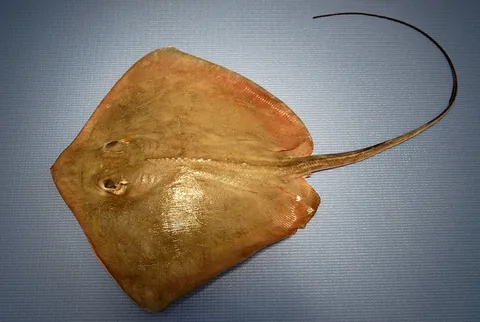

Southern stingray limits
| Waters | Size | Bag | Season |
|---|---|---|---|
| Gulf and Atlantic state waters | Not listed | 2 fish or 100 pounds per person per day, whichever is more. For larger fish such as the southern stingray, if you harvest two fish that have a combined weight of 150 pounds, that is your limit for that species. | Not listed |
What does a southern stingray look like?
- Hypanus americanus. Brownish on the back, grayer in juveniles, and white underneath.
- The disk is broadly angular, with pointed corners. The snout is moderately pointed and does not project forward.
- A sharp defensive spine sits near the base of a long whip-like tail. A well-developed ventral fin fold on the tail is usually brown to black. The dorsal fin fold is absent.
- The profile says the Atlantic stingray has a sharply pointed snout, and the bluntnose stingray has a dorsal fin fold on the tail.
- The profile lists a wingspan of 4 to 5 feet and weight up to around 200 pounds. That size note is not a minimum on the unregulated page.
Where do southern stingrays live in Florida?
The profile calls the southern stingray a bottom-dwelling coastal species, common at oceanic beaches, bays, estuaries and river mouths. It is generally near shore on grass and sand or mud flats, and it also enters deeper coastal water up to about 200 feet. It feeds mainly on invertebrates and small fish. The profile says the spine is for defense, can be regrown, and that waders should avoid handling the ray and use the stingray shuffle. It gives live birth, with up to seven pups per litter. The profile labels recreational regulations as unregulated. The unregulated page uses this ray in its large-fish example and does not list a season.
Regional limit pages
- Panhandle & Emerald Coast fishing rules
- Tampa Bay fishing rules
- Sarasota & Southwest fishing rules
- Florida Keys fishing rules
- Jacksonville & Northeast fishing rules
- Southeast & Treasure Coast fishing rules
Related rule pages
- Unregulated species default bag
- White grunt
- 2026 closed seasons calendar
- Open now and closing soon
- What to catch by month
Common questions
What is the southern stingray bag limit?
The default is two fish or 100 pounds per person per day, whichever is more. For larger fish such as the southern stingray, if you harvest two fish that have a combined weight of 150 pounds, that is your limit for that species.
Does the unregulated page list a southern stingray size or season?
No. The page does not list a minimum size or a season. The profile's wingspan of 4 to 5 feet and weight up to around 200 pounds are not a minimum on that page.
What gear is legal for southern stingray?
Hook and line, spears, gigs, haul seines and cast nets. Gear restrictions apply in certain locations. Chemicals, explosives, electricity, bang sticks and fish traps are illegal.
What does the profile say about the tail spine?
It is a sharp defensive spine near the base of the whip-like tail. The profile says it can injure a person who steps on the ray, that it can be regrown, and that waders should use the stingray shuffle and avoid handling the ray.